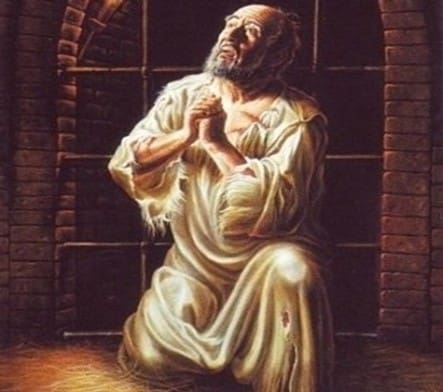
Paul’s Passionate Prayers
“Faith Under Fire”
1 Thessalonians 3:6-13
Wayne J. Edwards, Pastor
Thessalonica was a prominent port city in Macedonia, known for its commerce, cultural diversity, and strategic location along Roman roads.
- As documented in Acts 17:1-10, the Apostle Paul, accompanied by Silas and Timothy, planted the church at Thessalonica during his second missionary journey.
- Paul preached the gospel in the synagogue for several Sabbaths, and many Jews, Gentiles, and Greeks believed Paul’s message and received Jesus Christ as their Savior and Lord.
- Both local Jews and Gentiles began to violently persecute the new believers, accusing them of violating Roman law and causing a riot.
- However, the real issue was due to the Christian’s refusal to participate in the pagan rituals, including the worship of Roman gods, eating meat that had been sacrificed to idols, and the men’s participation in ritual prostitution and sexual orgies associated with the pagan worship.
When the persecution became so severe, Paul and his companions moved on to Berea, and later Paul traveled to Athens, Greece.
- Several months later, Paul and his companions were reunited in Corinth, and they sent Timothy to Thessalonica to let them know of their love and concern.
- After Timothy returned with the good news that, even though the persecution had not stopped, the believers were remaining faithful under fire, Paul wrote this letter to encourage the brethren, strengthen their faith, and correct any false teachings that had arisen in the fellowship, especially regarding Christ’s return to the earth.
From 1 Thessalonians 2:17 – 3:13, Paul’s letter sounds like a pastor’s journal, for while Paul’s words are urgent and grounded in doctrine, they are also tender and based in his love for the Lord Jesus, and for those who receive Him as their Savior and Lord.
- Paul wanted to be remembered not only as a great preacher of the gospel, but as a pastor; a shepherd who was willing to suffer with his people.
- In verses 1-5, Paul expressed his anxiety, not that they were suffering persecution, for he had told them to expect it, but that he could not be with them during this time.
- Paul was concerned that some of them may have renounced their faith in Christ Jesus, just to avoid the severe persecution. However, since Timothy had returned with the good news of their faith and love, and that they still had a good remembrance of his time with them, Paul was relieved that not only had none of them renounced their faith in the Jesus, but quite the opposite.
- 8-9 – “For now we live, if you stand fast in the Lord. For what thanks can we render to God for you, for all the joy with which we rejoice for your sake before our God, night and day praying exceedingly that we may see your face and perfect what is lacking in your faith?”
Two Timeless Truths:
- The trials and persecutions of believers are not accidental or incidental; they are providential, in that they are designed and appointed by God for our personal spiritual growth.
- The primary purpose of the pastor is to edify the members of the church through doctrinal teaching, discipleship, and his personal presence, “Until we all come to the unity of the faith and of the knowledge of the Son of God, to a perfect man, to the measure of the stature of the fullness of Christ.” Ephesians 4:13
First, Paul begins with the positive – Verse 9-10 – “For what thanks can we render to God for you, for all the joy with which we rejoice for your sake before our God, night and day praying exceedingly that we may see your face and perfect what is lacking in your faith?”
- Paul began all of his letters by expressing his thanks for his brothers and sisters in Christ for their spiritual growth.
- Because your faith is proclaimed in all the world.
- Because of the grace of God that was given to you in Christ Jesus.
- Because of your partnership in the gospel from the first day until now,
- Because of the hope laid up for you in heaven.
Second, Paul avoids fault-finding in his prayer –
- In Acts 17, Luke said, some of the unbelieving Jews became jealous of those who had received Jesus Christ as their Savior, and they stirred up a mob to persecute them.
- It would have been easy for Paul to say, “May our God toughen you up just a little bit more,” or “May the Lord help you stop being so sensitive and easily offended.”
- Paul’s passionate prayers always assumed the position of humility. He is comforted by their faith – he is filled with joy and thanks-giving for them.
Third, Paul distinguishes concern from responsibility.
- Paul had spent a lot of time with the new believers at Thessalonica, so much so that they had bonded over the study of scriptures, and in their opposition against those who were persecuting them.
- But rather than praying for their persecution to end, Paul prayed that he might be able to see them again, for Paul knows that persecution is the method God uses to strengthen the Christian’s faith in God.
Fourth, Paul prays corporately, i.e., he speaks for those who are a part of his mission team.
- In all of his letters, Paul writes as though he is speaking for the whole team. He sees himself as praying for others while also praying with others, because his goal is for all believers to dwell in unity and to be bound together in the love of God and in their love for God.
Fifth, Paul keeps his written prayers short and simple.
- Counting verses 9 and 10, this prayer is only five verses.
- However, in those verses, Paul touches on three major theological themes: Fellowship, love, and holy living.
- In 1 Thessalonians 5:17, Paul said Christians are to “pray without ceasing.”
Even in this short prayer, Paul gives us a model for our prayers for others:
- Verses 12-13: “And may the Lord make you increase and abound in love to one another and to all, just as we do to you, so that He may establish your hearts blameless in holiness before our God and Father at the coming of our Lord Jesus Christ with all His saints.”
- Paul was filled with joy before God because of them, but at the same time, he prayed that God would cause them to increase in their love for one another.
- So, while there was the potential of severe conflict within, God had used the severe persecution from without to draw them together in a unified body, and Paul said he was praying that their love for one another would increase.
- Enduring conflict is not easy, whether from inside of the church or from someone outside of the church. But, just as our salvation was achieved through Christ’s sufferings, so those who receive Jesus Christ as their Savior and Lord, will grow in the grace and knowledge of the Lord through suffering.
- Paul never prayed for God to remove the suffering from those he loved, because he knew that God was using that suffering to prepare them to be holy and ready when the Lord Jesus returns.
- 1 Peter 2:12 – “Having your conduct honorable among the Gentiles, that when they speak against you as evildoers, they may, by your good works which they observe, glorify God in the day of visitation.”
- Love and holiness are not two virtues we can choose as additional qualities of the Christian life; rather they are the evidence of our salvation through our faith in Jesus Christ.
- Therefore, we are to live each day of our lives in view of Christ’s coming, and pray that we, as well as those we love, will have our hearts overflowing with God’s love, and our lives outpouring with holiness.