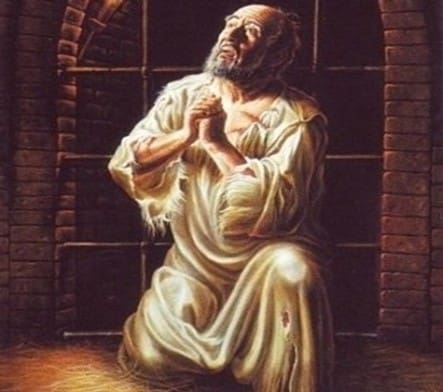
Paul’s Passionate Prayers
“Paul’s Prayer for Spiritual Strength”
Ephesians 3:14-21
Wayne J. Edwards, Pastor
The depth of our daily prayers is equal to our knowledge of God and our spiritual concern for those for whom we are praying.
- True praying in the Holy Spirit is not a mental exercise where we verbally express the desires of our heart for ourselves and for those we love.
- True praying in the Holy Spirit is the overflow of our souls for God and for those for whom we are praying.
The depth of our prayers is also equal to our intimacy with God.
- The more intimate we are with God through prayer, the more we are able to see this world through His eyes, and therefore, the actual needs of those for whom we are praying.
The more we know and understand God’s will for all mankind, the better we are able to see the true needs of those on our prayer list. Regardless of their life’s circumstances, our ultimate desire is for them to be living in obedience to God’s will as men, women, husbands, wives, fathers, mothers, and children.
- Rather than praying for God to do this or that or provide this or that for those we love, we need to take the time to see what God is already doing in their lives through those needs, and then unite with Him in prayer, to draw them to see their need for Him, for apart from their relationship with Him, they will never be satisfied in this life.
Ephesus was a major port city in the Roman province of Asia.
- Ephesus was known for its vast and diverse population and the massive temple of Artemis, which drew thousands of visitors.
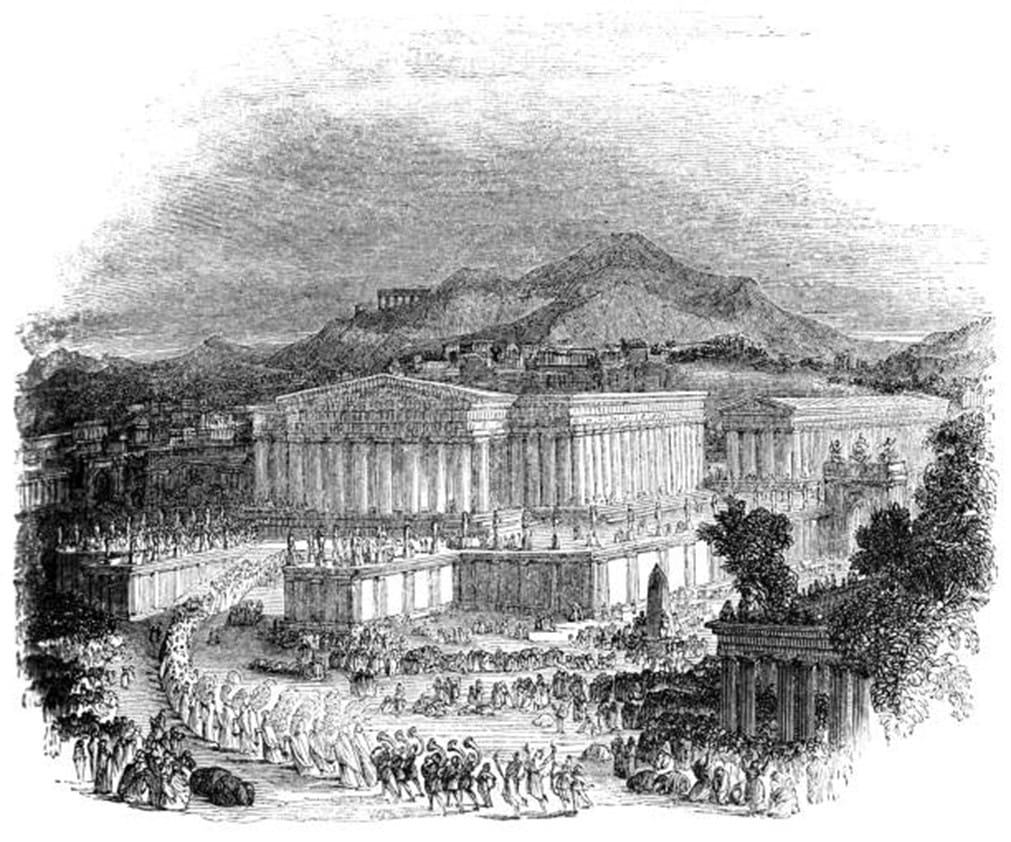
The Temple of Artemis was a grand temple in ancient Ephesus (modern-day Turkey) dedicated to the Greek goddess Artemis, listed as one of the Seven Wonders of the Ancient World. It was famed for its immense size and beauty, serving as a major pilgrimage site and a center for both religious and civic life, with its functions including acting as a marketplace and financial institution. The temple was destroyed and rebuilt multiple times, with the most famous version being an enormous, marble structure with 127 towering, decorated Ionic columns.
The Apostle Paul established the Church at Ephesus on his second missionary journey. After a few months, he left the Church in the hands of Priscilla and Aquila, and about 14 years later, Paul returned to Ephesus for three years.
- Paul wrote this letter to the Christians in Ephesus in A.D. 60-62, while he was under house arrest in Rome.
- In chapters 1-3, Paul described the believer’s heavenly blessings in Christ, including adoption, acceptance, redemption, forgiveness, wisdom, inheritance, the seal of the Holy Spirit, life, grace, and citizenship.
- In Chapters 4-5, Paul described how believers should live, once they are aware of all of the heavenly blessings he described in the first three chapters.
- Ephesians 2:10: “For we are his workmanship, created in Christ Jesus [Chapters 1-3] for good works. that we should walk in them [Chapters 4-5].
- Ephesians 6 describes the spiritual warfare that is going on all around us and how we can survive through it.
According to Paul’s first prayer in Ephesians 1:15-23, believers are to be more concerned about the spiritual needs of those for whom we are praying, than for their physical or material needs.
- In our human compassion for those who are hurting, we may be praying for God to remove the very thing He is using to draw them to see their sin, their need for a Savior, and Jesus Christ as the Savior they need.
According to Paul’s second prayer in Ephesians 3:14-21, believers are to be more concerned about the spiritual growth of those for whom we are praying, than their happiness and contentment in life.
- Paul said he “bowed his knees to the Father of our Lord, Jesus Christ.” This is just one of the postures of prayer listed in the Bible.
- Paul prayed for “the whole family in heaven and earth.” Paul refers to those who have and who will receive Jesus Christ as their Savior and Lord.
1. Vs. 16, Paul prays that the church might be “strengthened with might through the Holy Spirit in the inner man.”
- In 2 Corinthians 4:16, the “outer man is decaying, yet our inner man is being renewed day by day.” However, spiritual growth ought to increase with age, as we engage in those daily spiritual disciplines.
2. Vs. 17a, Paul prays that “Christ would dwell in the Ephesians’ hearts through faith.”
- In Romans 8:9, Paul said the Lord Jesus dwells in the hearts of all believers; thus, Paul’s prayer is that Jesus would be welcomed.
3. Vs. 17b-19a – Paul prayed that the Ephesian believers might know the extent of Jesus’ love for them.
- All believers are rooted and grounded in love, so Paul is praying that believers would be more aware of it.
4. Vs. 19b, Paul prays that the whole church would be filled with the fullness of God.
- Because the love of God has been poured into our hearts by the Holy Spirit, we now have the capacity to love God and to love one another.
In verses 20-21, Paul breaks out in a great doxology of praise:
“Now to Him who is able to do exceedingly abundantly above all that we ask or think, according to the power that works in us, to Him be glory in the church by Christ Jesus to all generations, forever and ever. Amen.”
- God is always at work in us: doing things through us that are beyond our awareness, much less our ability to comprehend, and doing it all for His glory and His glory alone.
- William Carey, the 18th century missionary who birthed the modern missionary movement, said Christians need to “expect great things from God and attempt great things from God.”
- The depth of our prayers should reflect our faith that our God is able to do far above what any one of us could do alone, or together as a family.