Old Testament Reading: Psalm 92:1-15
New Testament Reading: 1 Thessalonians 5:12-23
Return to Me
“The Rebuke of Religion”
Amos 5:1-27
Amos was the first of the twelve minor prophetic books to be written and the third to be included in the canon of the Holy Scriptures.
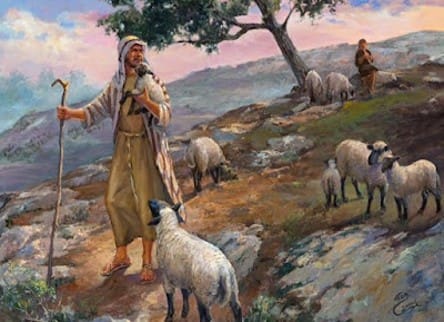
- Amos was a shepherd and a farmer from Tekoa, a mountain range south of Bethlehem in Judah.
- The prophecy of Amos covered the period between 786-746 BC when Jeroboam II was king of Israel, and Uzziah was the king of Judah; the same period that is covered by the prophets Hosea and Isaiah.
- It was a time of peace and prosperity for the people of Israel. But it was also a time of spiritual decline, for while they continued their temple services and seasonal celebrations, they had all but forsaken their relationship with God.
- God had rejected Israel’s religious practices and was, at that very time, raising up an ungodly nation to attack Israel, destroy the city, and either kill or take His people captive.
As they became weaker spiritually, the Israelites tried to merge the practices of their faith in the God of Israel with the practices of the worship of pagan gods of Baal, Ashtoreth, and Molech.
- “Syncretism” – the blending of the concepts and practices of the false religions with the truth of God’s Word.
- God rejected their events and activities of worship as being worthless to them and Him because they did not respect Him as the One, True, Sovereign Lord.
- God determined to bring His people to their knees, but not without warning, and that came through the voice of the Prophet, Amos.
- Even though it was 30 years later before it happened, Amos spoke as if it had already happened.
Christianity VS Religion
- Religion is a system of rules and regulations whereby a person attempts to prove his self-righteousness through discipline and obedience.
- Christianity is a relationship with a loving Heavenly Father that has been made possible through the Person and work of Jesus Christ. “This is eternal life; that they might know thee the only true God, and Jesus Christ, whom thou hast sent!” John 17:3
1. The Song of Death – Vs. 1-3
Amos compared Israel with a virgin woman who had died without bearing any children.
- Israel was the virgin bride of Jehovah God, but Israel had turned against God and forsaken her vow of loyalty and devotion.
- Therefore, Israel would not be able to defend herself against her enemies:
- A thousand soldiers would be rallied to her defense – only a hundred would return.
- A hundred soldiers would be rallied to her defense – only ten would return.
- God’s promises are irrevocable and eternal, but they are also conditional upon the obedience of those who receive them.
2. The Call to Life – Vs. 4-6
Amos held out God’s gracious invitation for Israel to repent and return to God:
- 4- “Seek ye Me, and ye shall live!”
- 6 – “Seek the Lord, and ye shall live!”
- Had the nation turned back to God, even at this late hour, God’s judgment would have been avoided.
- But unless and until they repented, there would be no place to run when God’s judgment began:
- Bethel – was to be destroyed
- The place where Jacob dreamed of the ladder to the heavens was now being used for the worship of false gods.
- Gilgal – was to be taken into captivity – The place where they first pitched their tents in the Promised Land was now only a religious shrine.
- Beersheba – taken into captivity – The place where God spoke to Abraham, Isaac, and Jacob was not the place where God was speaking to anyone anymore.
-
- The places God had established for the people to worship Him had been turned into places of idol worship.
3. The Contrast of Heart – Vs. 7-17
Amos contrasts God’s glory with the sinfulness of His people.
- He lists the evidence of the sovereignty of God – He put the stars in the sky, separated light from darkness, and limited the waters of the sea to their rightful place.
- He lists the causes of the death of a nation – the poor are mistreated, overtaxed, and exploited by the rich as the evidence of their false concept of God and their self-righteousness.
God’s judgment upon Israel was that He would allow them to be taken into captivity.
- Vs. 11 – other people would live in their palaces
- Vs. 11 – other people would harvest their vineyard
- Vs. 16 – they would wail and offer lamentations, but God would not hear.
- Vs. 17 – “For I will pass through thee, saith the Lord!”
4. The False Hope – Vs. 18-20
There would be those who would long for the day of the Lord to come to save them, but Amos said they need not expect it:
- 18 – it will be a day of darkness for Israel
- 19 – there will be no way of escaping God’s judgment
- Israel might be able to escape this calamity or that calamity, but sooner or later, they would encounter God’s judgment.
5. The Phony Faith – Vs. 21-27
Amos said that when God’s judgment began, the people would find no comfort in their false religion.
- God was not impressed with their feast days, their solemn assemblies, their burnt offerings, and their peace offerings.
- Neither was He pleased with their music because it was nothing more than religious mockery.
- God wanted an “inner righteousness” – that intrinsic commitment to worship God in Spirit and in Truth:
- Verse 24 – “Let judgment run down as waters and righteousness as a mighty stream.”
From the moment we are called to be God’s people, we are to continue to SEEK HIM until we KNOW HIM in all of His glory! Only then can we be assured of our eternal life. (John 17:3)