
THE WATCHMEN’S REPORT
NEWS STORIES THAT CONNECT WITH BIBLICAL PROPHECY
By Wayne J. Edwards, November 4, 2026
PNW NEWS STAFF, November 4, 2026
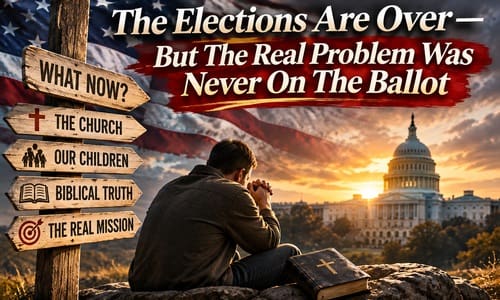
The votes have been cast. The celebrations have begun for some, while others are staring at election results wondering what happened to the country they thought they knew. For many Christians, the frustration runs deeper than which political party won or lost. It is the realization that candidates and proposals representing values they believe contradict Scripture continue to find support among millions of Americans. Ideas once considered radical are increasingly treated as mainstream, while traditional biblical convictions are often dismissed as outdated, intolerant, or even dangerous.
After months of political arguments, campaign promises, and warnings about America’s future, an unavoidable question remains: Where do we go from here? But perhaps the more important question is whether Christians have become so focused on winning elections that they have forgotten what it actually takes to change a nation.
Elections can change who governs a nation.
They can change laws, policies, and the direction of government. But they cannot, by themselves, change the human heart. And that may be the most important lesson Christians need to remember when the ballots have been counted.
Political Defeat Is Not Spiritual Defeat
One of the greatest dangers following a disappointing election is allowing political frustration to become spiritual discouragement. Christians can become so invested in particular outcomes that when those outcomes fail to materialize, they begin acting as though God’s purposes have somehow been defeated. But Scripture tells a very different story.
Daniel served faithfully in Babylon, surrounded by pagan rulers and a culture that rejected the God of Israel. Joseph remained faithful in Egypt. The apostles proclaimed the Gospel under Roman emperors who neither embraced Christian morality nor recognized the authority of Jesus Christ. The early Church did not possess political power, favorable courts, or a government committed to biblical values. Yet Christianity spread across the Roman Empire and eventually transformed entire societies. Its power was never found in controlling the government. It was found in the transforming message of Jesus Christ.
This does not mean elections are unimportant. Laws can protect the innocent, restrain evil, and preserve religious freedom. Political decisions have real consequences for families, churches, and future generations. But Christians must distinguish between losing a political battle and losing the spiritual war. God has not surrendered His throne because voters made decisions we disagree with.
Stop Expecting A Christian Nation Without Christian Convictions
Perhaps the most uncomfortable lesson from modern American elections is that the political landscape increasingly reflects a much deeper cultural and spiritual struggle. Christians sometimes express disbelief when voters embrace policies they believe undermine biblical morality, redefine marriage and family, or elevate government solutions above personal responsibility. But why should we expect a society increasingly disconnected from Scripture to consistently make decisions based upon Scripture?
For decades, biblical literacy has weakened, church participation has declined, and younger generations have grown up in an environment where traditional Christian beliefs are frequently challenged. Many Americans no longer share the basic moral assumptions that once influenced public life. Even the meaning of words such as truth, freedom, justice, and morality has become a source of disagreement. An election does not create these divisions. It reveals them. And that should force the Church to confront a difficult reality: We cannot expect political victories to compensate for generations of spiritual neglect. If Americans no longer believe that God’s Word provides an objective moral standard, why would we expect them to vote as though it does?
If children are raised without a biblical understanding of human identity, marriage, sexuality, or the sanctity of life,
why should we be shocked when they eventually embrace competing ideas? The answer cannot simply be better campaign advertisements, more political donations, or louder arguments on social media. The Church must recover its confidence in teaching biblical truth clearly, consistently, and without apology.
Washington Cannot Produce A Spiritual Revival
There is a dangerous temptation among Christians to view political leadership as the primary instrument for restoring America’s moral foundations. Elect the right president. Secure the right judges. Pass the right legislation. Defeat the right ballot initiatives. These efforts may accomplish important objectives. But none can accomplish what only the Gospel can do.
A government can discourage certain behaviors through legislation, but it cannot produce repentance. It can protect religious liberty, but it cannot make someone love Jesus Christ. It can establish public policy, but it cannot transform the human heart. America’s deepest problems cannot be solved exclusively through legislation because many of them begin long before anyone enters a voting booth. Broken families, fatherlessness, addiction, dishonesty, materialism, sexual confusion, and spiritual emptiness are not merely political problems. They are also moral and spiritual challenges.
Second Chronicles 7:14 calls God’s people to humility, prayer, repentance, and turning from wickedness. Although that promise was originally given to Israel, the call to spiritual self-examination remains a powerful lesson for Christians. Notice where the responsibility begins: not with unbelievers, not with politicians, but with God’s people. Before asking why the nation has abandoned biblical values, perhaps churches should examine whether they have consistently taught and practiced those values themselves. A Church that compromises biblical truth to remain culturally acceptable should not be surprised when the culture sees little reason to take its message seriously.
Our Children Are The Next Great Battleground
While Christians spend enormous energy debating what happens in Washington, another battle is unfolding much closer to home. It is taking place in classrooms, on smartphones, through entertainment, and across social media platforms that influence children for hours every day.
The next generation is being taught competing answers to life’s most important questions: Who am I? What is truth? What makes something right or wrong? What is the purpose of marriage? Does God have authority over my life? If parents and churches are not intentionally answering those questions, someone else will.
This may be one of the most important lessons Christians can take from any election. Political victories can sometimes slow cultural changes. But they cannot replace the daily responsibility of raising children who understand Scripture, recognize deception, and possess the courage to stand for their convictions. Deuteronomy 6 describes faith as something parents are to teach diligently throughout ordinary life, not merely during an hour of Sunday school.
- Yet how many Christian families can discuss political controversies in great detail while struggling to explain foundational biblical doctrines?
- How many young people know the political arguments surrounding morality but cannot articulate why they believe the Bible is true?
The Church cannot afford to raise a generation of political conservatives who lack a personal commitment to Jesus Christ. Winning an election means little for the long-term future of Christianity if the next generation abandons the faith.
Don’t Retreat From The Public Square
None of this should be interpreted as a call for Christians to abandon political involvement.
Scripture does not command believers to remain silent when injustice occurs or to ignore the welfare of their communities. Christians should continue to participate in civic life, defend religious freedom, advocate for the vulnerable, and speak openly about their convictions. But there is a difference between faithful engagement and allowing politics to consume our identity.
Political outrage can become addictive. Every headline demands a reaction. Every controversy becomes an emergency. Every election is portrayed as the final opportunity to save the country. Eventually, Christians can spend more time arguing with strangers online than sharing the Gospel with their neighbors. That is a spiritual imbalance worth correcting. The answer is not withdrawal. It is perspective.
We can care deeply about our country without making it an idol. We can defend biblical principles without allowing bitterness to consume us. We can oppose policies we believe are wrong while remembering that the people supporting them are also people who need Christ. Our calling is bigger than defeating political opponents.
Our Ultimate Citizenship Is Not Determined By Elections
Philippians 3:20 reminds believers that our citizenship is in heaven. Hebrews 12:28 speaks of receiving a kingdom that cannot be shaken. Those truths become especially important when the political and cultural landscape appears uncertain. America is not the Kingdom of God. No political party represents the fullness of biblical truth. No election can guarantee a righteous society, and no electoral setback can cancel the promises of Christ.
For Christians who study Bible prophecy, this should be especially familiar territory. Scripture never promises that the world will steadily become more receptive to biblical truth before Christ returns. Instead, believers are repeatedly warned about deception, lawlessness, persecution, and growing hostility toward God. Our responsibility is not to panic when the world behaves like the world. It is to remain faithful.
So, what happens after the elections?
We pray. We teach our children.
We strengthen our churches. We serve our neighbors.
We speak the truth. We remain engaged in our communities. And we refuse to surrender our hope to political circumstances.
The election may be over. The cultural battles will continue. But the Church’s calling has not changed, and neither has the God who gave it.
OCCULTISTS LAUNCH “BLUE WAVE RITUAL”
OF WITCHCRAFT TO INDUCE
A DEMOCRAT TAKEOVER OF CONGRESS
BENJAMIN GILL, NOVEMBER 2, 2026
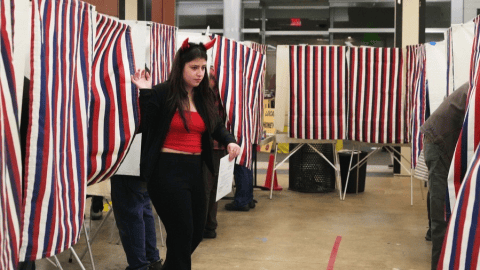
A person dressed in devil horns for Halloween votes at an early voting polling location at Midtown Mall, Oct. 31, 2026, in Anchorage, Alaska.
Practitioners of witchcraft and the occult are at it again,
casting spells to “bind” President Trump and influence the midterm elections in order to induce
a Democratic “Blue Wave” takeover of Congress.
Occult author and speaker Michael M. Hughes used the website Medium to rally witches and non-witches alike to cast a collective spell on October 26, 2026, to undermine President Trump and “save democracy.”
Hughes and his allies who embrace witchcraft have attempted this dark spiritual strategy in previous elections as well. Religion News Service has reported on his efforts over the years, going back to his “Spell to Bind Donald Trump and All Those Who Abet Him” back in 2017.
He also published an entire book about spells and magic back then, and credited the movement with helping Democrats take over the House of Representatives in 2018 to impeach Trump.
“Any of these rituals that we’ve worked over the past few years is, for me, like putting gas in the spiritual gas tank, and that’s what I think rituals can do for people,” he said at the time. In 2020, CBN News also reported that witches plotted multiple “binding” events to cast a similar Blue Wave Spell to get Joe Biden elected and President Trump removed from office. Once again, Hughes is guiding his followers with the spell and items they’ll need to cast the “Blue Wave Ritual 3.0.”
He writes, “You may repeat it as often as you wish (including on or the night before Election Day, November 3). Even if you’ve never considered doing a magical spell, your country needs you now more than ever…”
“It’s time to put all of our collective spiritual energy into the fight,” he continues. “Join us. You don’t need to be a witch, a Wiccan, or a magic practitioner. You can be any religion or none, spiritual or an atheist. You can do the ritual as a prayer to whatever god or goddess you favor, to the Universe at large, or just to reaffirm your commitment to your ideals.
You don’t need to believe in magic to make magical things happen.”
His plan involves a tarot card, altars, incense, photos of candidates, a nail, and spells which we won’t repeat, including specific chants to break down Republican candidates and specific chants to raise up Democrats. He instructs those engaging in this witchcraft to use certain words spoken “with absolute contempt and fury,” and to believe deeply with faith because that’s “an important key to manifesting magic.” Hughes specifically names U.S. Senate candidates James Talarico (D-TX) and Abdul El-Sayed (D-MI) as politicians who should be raised up for victory by those participating in this witchcraft.
The group Intercessors for America (IFA) is sounding the alarm about this wave of witchcraft, saying it’s not just Hughes, but there are other occultists leading this charge as well. IFA is calling on Christians to engage in spiritual warfare to cancel the dark magic being deployed in this election. “It’s important for intercessors to understand some of its components so they can pray against this nefarious scheme,” IFA states. IFA reminds Christians that intercessory prayer is the key to seeing God’s will done on earth as it is in heaven. The group explains that Christians possess the power to battle the darkness, offering the following analysis and prayer:
“Assassination culture, reproductive ‘rights,’ gender confusion, transhumanism, antisemitism, medical tyranny (vaccine mandates), and Marxism – these are all the rotten fruit of paganism. But we are not helpless in this battle. Let’s take our cue from godly men such as Rees Howells, a missionary whose life of intercession literally changed world events. U-boats, tanks, bombs, and Hitler himself were no match for the powerful prayers that shook heaven during World War 2. The forces of darkness stand no chance against the King of Kings! Jesus Christ has ALL AUTHORITY over any spell or any demons that could be summoned. As intercessors, we partner with Him. Behold, I have given you authority to tread on serpents and scorpions, and over all the power of the enemy, and nothing shall hurt you, Luke 10:19.
Let’s Pray! Lord Jesus, we ask for Your mighty hand to halt the forces of darkness that seek to influence the 2026 midterm elections and any evil plan in the works. We plead Your precious blood over our poll stations and workers, as well as over the people of our nation. We also plead Your blood over any spells, enchantments, or curses that are being cast by the Blue Wave 3.0 Movement. We declare those spells null and void! We know that many who are engaged in pagan practices, such as witchcraft, do not know who You are, Lord. We pray that instead of a Blue Wave across America, we would have a wave of revival where dark hearts are enlightened by the truth of Your Word and by Your sacrifice on the cross. Give Your angels charge over our citizens, over our elections, and over the beloved land You have given us.”
“HIGH SQUEAKEY VOICE”
EX-MICKEY MOUSE CHARACTER
AMONG 281 ARRESTED
IN POLK COUNTY CHILD PREDATOR STING
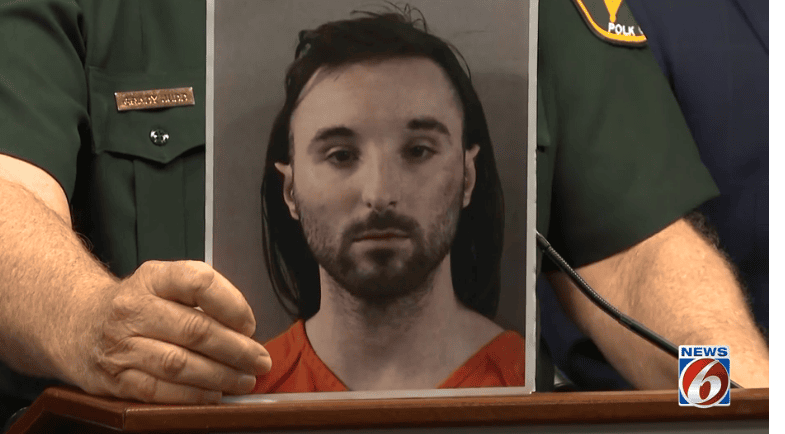
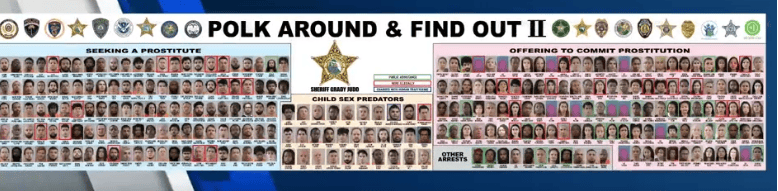
The Polk County Sheriff’s Office announced the results of Operation “Polk Around and Find Out II,” a seven-day undercover sting targeting human trafficking and child predators. [1, 2]
Key Operation Facts
- Total Arrests: 281 people arrested, resulting in 488 total charges (198 felonies and 290 misdemeanors). [1]
- Breakdown of Arrests:
- 239 arrests related to prostitution offenses (solicitation, offering to commit prostitution, and aiding, abetting, or transporting).
- 31 arrests of suspected child sexual predators.
- 11 additional arrests. [1]
- Victims Identified: 11 suspected human trafficking victims were identified and connected with support services. [1]
- Demographics & Statistics:
- 32 suspects were in the country illegally across nine different countries.
- 24 suspects brought firearms, and 32 were charged with drug possession.
- 22 suspects were collecting public assistance collectively totaling $8,373 per month. [1, 2]
High-Profile Arrests & Theme Park Employees
- Theme Park Workers: 17 total theme park employees were arrested — 13 from Walt Disney World and 4 from Universal Orlando.
- Disney confirmed that all 13 of its arrested workers have been terminated.
- One suspect, Adam Snyder (24), worked in Toy Story Land at Disney World and was among those accused of traveling to meet a minor.
- Former Mickey Mouse Character: Collin Klaco (24) was arrested in the child predator sting after communicating online with a detective posing as a guardian. Detectives found Disney-branded diapers in his vehicle. He told authorities he no longer worked for Disney at the time of the arrest but had previously performed as a Mickey Mouse character.
- Orange County Deputy: Deputy Eric Raymond, an Orange County Sheriff’s Office deputy and school resource officer, was arrested on a solicitation of prostitution charge. [
- Youth Coach: Rashion Crayton (31), a youth football coach, was arrested after allegedly exchanging explicit messages with an undercover detective posing as a 14-year-old girl. [
Twenty-two suspects are currently collecting public assistance, totaling $8,373 per month — or $100,476 per year — collectively. Eleven human trafficking victims were identified during the investigation, and the 122 suspects who traveled to commit prostitution were screened by detectives and social services organizations to determine if they were being trafficked or exploited.
========================================================
ONE HUNDRED SIXTY- THREE MISSING CHILDREN
AGES 2-17 HAVE BEEN LOCATED IN FLORIDA
Florida officials said 163 missing children were recovered during a five-day statewide operation that included the Sarasota and Manatee County sheriff’s offices. The children ranged in age from 2 months to 17 years old, according to Attorney General James Uthmeier’s office.
FDLE led Operation Statewide Shield, which officials described as Florida’s first statewide child recovery initiative and the largest operation of its kind in state history. The operation brought together state, local and federal partners to identify, locate and recover missing children.
Officials said the Tampa Bay region accounted for 46 recoveries, the largest regional total reported. Miami had 41 recoveries, followed by Jacksonville with 32, Orlando with 21, Fort Myers with 12, Pensacola with eight and Tallahassee with three. The release did not specify how many recoveries occurred in Sarasota or Manatee counties.
Officials said some children had experienced abuse, neglect, exploitation or exposure to criminal activity, including human trafficking. The release did not detail individual cases or say how many children were connected to each allegation. Recovered children were taken to designated recovery hubs, where officials said they were connected with child welfare professionals, medical providers, victim advocates and other services.
The Attorney General’s Office also reported multiple arrests. The release described allegations including lewd and lascivious offenses involving minors, interference with child custody and resisting an officer without violence. Operation Statewide Shield included work in Pensacola, Tallahassee, Jacksonville, Orlando, Tampa, Fort Myers and Miami. Officials said recoveries also involved locations in several states, Puerto Rico and other countries.
Copyright 2026 WWSB. All rights reserved.
PNW STAFF, NOVEMBER 4, 2026
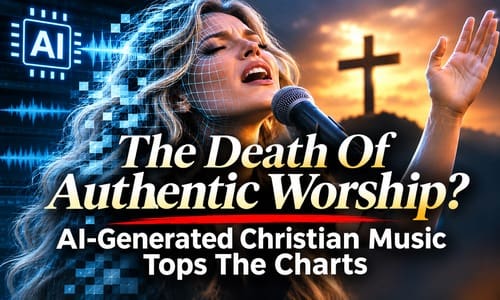
A Christian song about heaven, grief, and the loss of a loved one has accomplished something remarkable. It climbed to number one on the U.S. iTunes music chart, competing against some of the biggest names in the industry. There is just one problem. The singer delivering those emotional lyrics may not be a real person at all.
The song, “Tell Me, How Is Heaven?” was released by an act called May the Lord Studio. Its YouTube video has attracted millions of views, while the project has built an enormous social media following. But behind the moving vocals and carefully crafted imagery is a music operation that acknowledges using artificial intelligence. Reports identify the popular AI music platform Suno as the technology behind the recording. Yet listeners purchasing the song on iTunes may never realize the voice moving them to tears was artificially generated.
Welcome to a new era of Christian music,
where the person singing about heaven may never have experienced grief, never attended church, never prayed, and may not even exist.
When Artificial Faith Tops The Charts
The controversy isn’t simply that artificial intelligence helped create a popular song. Technology has transformed music production for decades. What makes this development troubling is the possibility that listeners are forming emotional connections with what they believe is a genuine Christian performer, without realizing how much of that performance may be manufactured.
May the Lord Studio acknowledges AI involvement in its music, and some streaming platforms have identified that involvement. But how many grieving listeners investigate an artist’s website before downloading a song? Most people assume that when they hear a powerful voice singing about heaven, there is an actual person behind the microphone. They assume the performer has some connection to the emotions being expressed. Those assumptions can no longer be taken for granted.
Should AI-generated performers compete on the same charts as human artists without unmistakable labeling?
The Difference Between Creativity And Deception
There is nothing inherently wrong with Christians exploring artificial intelligence as a creative tool. Someone who writes heartfelt lyrics but lacks musical ability can now experiment with melodies, instruments, and arrangements. Small churches and independent Christian creators can produce music previously requiring expensive studios. These possibilities are exciting. The problem begins when technology stops assisting human creativity and starts replacing the human identity behind it.
Consider the difference between a songwriter using AI to arrange a song and a computer-generated singer presented through images, social media accounts, and music releases resembling an actual performer’s career. One is a tool. The other risks becoming an artificial personality marketed as a human experience. And in Christian music, that distinction matters.
A song about losing a loved one can speak directly to someone who has buried a spouse, parent, or child. Listeners may believe the performer understands their pain because they hear what sounds like genuine sorrow. But a synthetic voice has never stood beside a grave. It has never wrestled with God through a sleepless night or experienced the comfort of Scripture during personal tragedy. The human creators may have experienced those things. But listeners deserve to know whose testimony, if anyone’s, they are hearing.
Can A Machine Really Lead Someone In Worship?
Here is where the issue becomes especially important for Christians. David wrote psalms flowing from repentance, suffering, and praise. Paul and Silas sang hymns while imprisoned. The early Church sang spiritual songs as expressions of genuine faith. Biblical worship is not simply the production of beautiful sounds. It is an expression of the human heart directed toward God. Jesus declared in John 4:24 that those who worship God must worship Him in spirit and truth. A computer can reproduce the sound of worship. It can generate emotional lyrics and a voice that seems overwhelmed by God’s presence. But it cannot worship God. It cannot repent, believe, love Christ, or surrender its life to Him. Certainly, God can use a song produced with AI to encourage a believer. The listener’s response can still be genuine worship. But Christians must distinguish between an artificial performance of spiritual emotion and authentic spiritual experience.
When Christian Music Becomes A Factory
Imagine a music company generating dozens of Christian songs every week, testing which themes produce the strongest emotional responses, and releasing endless variations without hiring singers or musicians. Songs about heaven, grief, healing, marriage, and personal struggles could be manufactured at extraordinary speed. Artificial performers could receive names, faces, biographies, and social media personalities designed to appeal to particular Christian audiences.
Unlike human performers, these digital personalities would never grow tired, demand compensation, or need time away from recording. The temptation would be obvious: manufacture whatever sells.
Christian music already operates within a commercial industry where popularity and streaming numbers influence what gets promoted. AI could accelerate those pressures dramatically. A song about heaven could become another product optimized for grieving customers. That does not establish that May the Lord Studio intended to exploit anyone. But it demonstrates why transparency matters.
The Church Must Demand Something Better
Apple and other music platforms don’t necessarily need to ban AI-generated songs. But they should require clear disclosure when artificial voices or performers are used. Christian radio stations, worship playlists, and publishers should establish similar standards. Churches should also resist replacing human-led worship with synthetic performances simply because they sound polished and cost less. There is a difference between using technology to support ministry and allowing technology to manufacture the appearance of ministry. And that distinction is becoming increasingly important.
When Everything Sounds Spiritual, What Is Real?
Artificial intelligence is rapidly learning to imitate the outward expressions of human faith. It can simulate compassion, produce persuasive sermons, generate convincing testimonies, and sing songs that sound deeply spiritual. Soon, Christians may encounter virtual worship leaders who never existed, inspirational testimonies from fictional believers, and entire online ministries built around artificial personalities. The question is no longer whether AI can sound Christian. It already can.
Scripture repeatedly warns believers against confusing outward appearances with spiritual reality. First John 4:1 instructs Christians to test the spirits rather than blindly accepting every spiritual claim. That principle of discernment becomes especially relevant when technology can manufacture convincing religious experiences. A beautiful voice is not proof of a faithful heart. Emotional lyrics are not evidence of genuine testimony. And millions of views do not establish spiritual authenticity. An AI-generated Christian song reaching number one on iTunes may seem like a small development today. But it raises a question the Church cannot afford to ignore:
When machines can perfectly imitate the sound of worship, will we still care whether there is a worshiper behind the voice?
THE MEDIA IS SILENT WHILE
130 CHRISTIANS ARE SLAUGHTERED
IN THREE DIFFERENT COUNTRIES
JOSHUA ARNOLD, OCTOBER 31, 2026
The past week was one of the most fatal for Christians around the world in recent memory. From Nigeria to Ethiopia to Jordan, gunmen slaughtered more than a hundred Christians.
The somber news reminds Christians in America of the urgent need our fellow brothers and sisters in Christ face every day. It also accentuates the stakes in Tuesday’s election. On Friday, gunmen attacked a Christian community in northeastern Nigeria, firing on people as they fled into a river. At least 62 people were killed in the attack, 52 were wounded, and thousands fled their homes. In the past decade, Islamist militants have killed tens of thousands of Christians in Nigeria.
Also on Friday, three unnamed terrorists opened fire at Christians gathered for a funeral outside St. George’s Greek Orthodox Church in the village of Hmoud, east of the Dead Sea. Jordanian authorities have suspects in custody, making this the only one of the three attacks where government authorities have acted to protect Christians.
On Saturday, Ethiopian Orthodox Christians in the Oromia state suffered a series of attacks in which more than 60 people were killed, including five children, and 20 houses were burned to the ground. One survivor described it as an ambush, in which the attackers surrounded their victims on all sides.
A local official blamed the attacks on a rebel coalition, Alliance for Survival, which includes the Oromo Liberation Army (OLA). However, according to Christian Emergency Alliance, “surviving witnesses claimed regional authorities collaborated with Islamist militias to carry out the massacre.”
All three attacks came the weekend before International Religious Freedom Day (October 27), and also shortly before the U.S. midterm elections. Fortunately, international religious freedom still finds supporters in both parties — far more than pro-life or pro-marriage positions. For instance, a bipartisan bill to reauthorize the United States Commission on International Religious Freedom (USCIRF) passed the Senate unanimously on September 30. However, the parties do vary in the intensity of their commitment to international religious freedom.
In 2018, the Trump administration hosted the first-ever Ministerial to Advance Religious Freedom, an international summit of government leaders and advocates focused on achieving real change. The event has occurred annually since 2018, but the burden of hosting it was transferred to nonprofits after the Biden administration declined to maintain the ministerial in 2021.
Indeed, the Biden administration explicitly rejected a foreign policy that emphasized religious freedom in favor of one that emphasized the LGBT agenda and abortion.
“This is a major shift away from international religious freedom — moving away from even calling it religious freedom,” former USCIRF Commissioner Nina Shea said of the Biden administration policy. “It’s more of a watered-down freedom of belief or religion, and equating religion with belief, which is very dangerous because that would mean you have a right to believe what you want to believe, but you may not be allowed to practice it in a public square.”
Sadly, many foreign leaders predicted the Biden administration’s pivot away from religious freedom and had given that as their reason for not implementing more permanent change. It is one thing for Americans to give lip service to religious freedom and warn the world that we are watching. But what really matters to Christians facing persecution is when governments (and militant groups) believe that America will not only watch but act to protect the religious freedom of persecuted Christians abroad. Thus, the intensity of America’s commitment to religious freedom is what actually has an impact.
Christians have long been persecuted for their faith and will continue to face fiery trials for as long as the Lord tarries. As Paul reminded his readers, quoting from Psalm 44, “for your sake we are being killed all the day long; we are regarded as sheep to be slaughtered” (Romans 8:36). Yet Christians continue to persevere in difficult circumstances because of the hope that is within them. As Paul wrote to the Thessalonians, “We do not want you to be uninformed, brothers, about those who are asleep, that you may not grieve as others do who have no hope. For since we believe that Jesus died and rose again, even so, through Jesus, God will bring with him those who have fallen asleep” (1 Thessalonians 4:13-14).
“For the Lord himself will descend from heaven with a cry of command, with the voice of an archangel, and with the sound of the trumpet of God. And the dead in Christ will rise first. Then we who are alive, who are left, will be caught up together with them in the clouds to meet the Lord in the air, and so we will always be with the Lord,” Paul continued. “Therefore encourage one another with these words” (1 Thessalonians 4:15-18).
These words do bring much-needed encouragement. The survivors of the attacks in Nigeria, Ethiopia, and Jordan are likely consoling their souls in such promises even now. But the Christian’s final hope also motivates us to action now, and believers with an opportunity to vote can use that vote to succor their suffering brothers and sisters halfway around the world.
Originally published at The Washington Stand
==============================================================
THE ROAD TO THE FALSE PROPHET MAY BE PAVED
WITH PROMISES OF PEACE
PNW STAFF, NOVEMBER 3, 2026
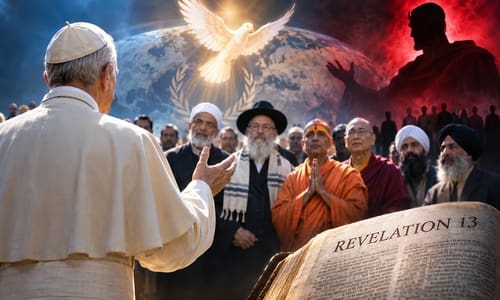
What if the greatest religious deception in history doesn’t begin with an attack on Christianity, but with an invitation to unite in the name of peace? Imagine a world where religious leaders stand together, promising to end hatred, division and war. Christians, Muslims, Hindus, Buddhists and others are encouraged to set aside their differences for the greater good. It sounds like a noble cause. But what happens when the price of that unity is abandoning the truth that Jesus Christ is the only way to God?
That question has taken on renewed significance following Pope Leo XIV’s message to a major interfaith gathering in Assisi, Italy, on October 27, where hundreds of religious representatives came together around a shared commitment to peace. The Pope declared, “There is no such thing as a holy war: only peace is holy.” But for Christians familiar with the warnings of Revelation, the pursuit of religious unity raises a troubling possibility: Could the world’s longing for peace eventually become the very instrument through which the False Prophet leads humanity into its greatest spiritual deception?
When Peace Becomes More Important Than Truth
Christians should seek peace. Jesus blessed the peacemakers, and the Apostle Paul instructed believers to live peaceably with others whenever possible. But the claim that there is no such thing as a holy war is difficult to reconcile with Scripture. Throughout the Old Testament, God specifically commanded Israel to engage in warfare for His purposes, including the conquest of Canaan under Joshua. And Revelation 19 describes Jesus Christ returning in judgment against the forces of evil, declaring that “in righteousness he doth judge and make war.”
Certainly, men have repeatedly abused religion to justify bloodshed. No Christian today has authority to declare a war holy simply because it advances a religious cause. But God’s righteous judgment is not the same as man’s religious violence. Scripture does not permit us to erase one because humanity has abused the other. More importantly, the Bible never teaches that peace should come at the expense of truth. Jesus Christ did not claim to be one of many legitimate paths to God. He declared in John 14:6, “I am the way, the truth, and the life: no man cometh unto the Father, but by me.” That declaration is not compatible with the idea that all religions ultimately lead to the same destination.
Christians can respect people of other faiths, defend their freedom and cooperate with them in humanitarian efforts. But Christianity cannot surrender the exclusive claims of Jesus Christ without surrendering the Gospel itself. And that is precisely where the pursuit of global religious unity becomes spiritually dangerous.
The False Prophet: Revelation’s Warning About Religious Unity
We tend to imagine the Antichrist’s religious system emerging through intimidation, persecution and open hostility toward Christianity. But what if its initial appeal is exactly the opposite? What if the foundations are laid through promises of peace, acceptance and unity? A world exhausted by conflict might eagerly embrace a religious leader who promises to end division, especially if the only sacrifice demanded at first is the abandonment of doctrines considered too exclusive or offensive. Revelation 13 describes a terrifying future in which the world comes under the authority of a powerful political ruler commonly identified as the Antichrist. But this ruler has an accomplice. A second figure, later identified as the False Prophet, emerges with extraordinary religious influence. He performs deceptive signs and directs the inhabitants of the earth to worship the first beast. Revelation 13:12 says he “causeth the earth and them which dwell therein to worship the first beast.”
Think about what that means. The Bible warns of a coming religious deception so persuasive that people from across the world will be drawn into worshiping a leader who stands in direct opposition to God. This is not merely a political dictatorship. It is a spiritual counterfeit, backed by supernatural deception and ultimately connected to a system controlling economic participation. For prophecy-minded Christians, that raises an unavoidable question: What kind of religious environment would make such a deception possible?
- Could a world increasingly conditioned to believe that religious differences are unimportant become more receptive to a universal spiritual authority?
- Could a future religious leader exploit humanity’s desperate longing for peace to persuade people that traditional doctrines must be abandoned for the greater good?
- And could Christians who refuse to compromise eventually be portrayed as enemies of world unity?
These are possibilities, not declarations that today’s interfaith gatherings fulfill Revelation 13. Scripture does not identify Pope Leo as the False Prophet, and participating in interfaith dialogue is not proof of prophetic deception. But the warning itself is unmistakable: religious authority, worldwide popularity and promises of peace are no guarantee that a movement comes from God.
The Coming Religion Of Peace And Acceptance?
Imagine a world devastated by war, economic upheaval and international instability. People are frightened. Governments are desperate for order. Religious leaders are called upon to unite humanity around a common spiritual message. The invitation would be irresistible to many: stop fighting over doctrine, stop insisting your religion alone is true, and embrace a shared faith in peace, love and human brotherhood. But what happens to Christians who insist that salvation is found exclusively in Jesus Christ? What happens when biblical convictions are labeled divisive, intolerant or dangerous to the new global harmony?
A religious system capable of embracing nearly every belief except the exclusive claims of Christ would not be a triumph of Christianity. It would be a rejection of its foundation. The Apostle Paul warned that a time would come when people would proclaim “Peace and safety” before sudden destruction (1 Thessalonians 5:3). Jesus warned that false prophets would arise with extraordinary power to deceive (Matthew 24:24). Those passages should not be used to condemn every peace initiative. But neither should Christians ignore their warning that deception can arrive wrapped in reassuring language. The most dangerous spiritual deception may not come openly attacking Christianity. It may come promising to include Christianity, provided Christians surrender the very truths that make their faith unique.
A Church That Cannot Discern Will Be Easily Deceived
The issue is not whether Christians should seek peace with Muslims, Hindus or Buddhists. Of course they should. The issue is whether the Church will continue proclaiming that Jesus Christ is the only way to salvation when that message becomes increasingly unwelcome.
Revelation warns that a future religious leader will persuade the world to follow a counterfeit savior. That should make believers particularly alert to movements that elevate unity above doctrine and acceptance above truth. The Church does not need a Gospel broad enough to satisfy every religion. It needs the courage to proclaim the Gospel Christ actually gave us.
The coming great deception may not demand that Christians stop talking about Jesus. It may simply demand that they stop insisting He is the only way. And that is why believers must be careful about any movement that promises unity while asking them to compromise the truth.
Because the road to the False Prophet may not be paved with threats of persecution at first. It may be paved with promises of peace.